Thursday, May 30, 2013

Good reputation for your camera

Early cameras from the 16th and 17th century could project images onto paper or glass but study regarding taking, processing and printing the pictures required a lot more years. Up to the 17th century, researchers thought that light was composed essentially from the 'white' that's perceived through the eye. It required the study made by famous physicist Isaac Newton to uncover that light is really made up of a spectrum of colours. As they designed a large contribution to study regarding optics (that's fundamentally of camera advances) with this particular discovery, Newton didn't really have anything related to camera development by itself.

The first camera that first grew to become a phenomenon was a bit more than the usual pinhole camera and could be tracked to 1558. It had been known as your camera Obscura. Your Camera Obscura was seen as an drawing tool for any clearer and realistic portrayal of objects. It had been in early 1800s that the invention named your camera Lucida was created by Cambridge researcher William Hyde Wollaston that comprised of the optical device that may help a painter notice a distant scene or person or object on the paper surface that she or he was using to attract. Quite simply the artist reaches notice a superimposed picture of a topic in writing which image might be effectively used to try to draw, trace or fresh paint it. Both Camera Obscura and also the Camera Lucida provided a picture which was temporary, that could 't be lastingly taken onto paper for later reference.

Studies however ongoing well in to the 1800's regarding how to really capture the look onto material. It had been throughout this time around, around 1822 that French investigator Frederick Nicephore Niepce, produced the very first photograph by utilizing paper which was covered having a chemical. The look wouldn't stay permanently around the paper and would disappear after a while. Nevertheless, regardless of the short-resided character from the image, the idea of photography was created with this particular experiment and paved the way in which for more study and rise in this area.

Taking images to retain them longer and permanently grew to become the following large mission for scientists. Another Frenchman Louis-Jacques-Mandé Daguerre joined with Frederick Nicéphore Niépce in 1829, to build up the entire process of creating permanent photographs. Frederick Niépce died in 1833 but Daguerre ongoing using the work and been successful in 1837 after many lengthy many years of experimentation. The entire process of taking photo taking images that will not disappear, created by Daguerre found be referred to as 'daguerreotype'.

The term 'photography' was created by researcher Mister John F.W. Herschel in 1839 which is really comes from two Greek words 'photos' meaning light and 'graphein' meaning draw.

A rather more complex form of the daguerreotype known as the Calotype procedure that makes multiple copies possible while using bad and the good method grew to become available soon after. Actually, it had been throughout the 1840's that using photo taking images in ads first began and cameras made their mark around the energy of visual communication. It wasn't later, within the 1850's that photography enthusiasts first began experimentation with underwater photography of seascapes.

Up to 1850, the entire process of taking images was cumbersome needing up to 30 minutes of sunshine exposure. The invention produced in 1851 by Ernest Scott Archer would be a blessing because the new method called the Collodion process known as just for 2-3 seconds of sunshine contact with capture a picture.

Just before 1871, photography enthusiasts experienced an improvement process where they needed to coat home plate with wet chemical every single some time and process the look immediately. Using the invention the gelatin dry plate silver bromide process by Richard Leach Maddox, disadvantages weren't required to be developed immediately. This was a important discovery since up to then your taken image needed to be processed instantly.

Kodak produced in 1888 by George Eastman is a present day pioneer of sorts in cameras and photography for that public. George Eastman and also the researchers who labored with him at Kodak developed the photo taking film in 1889 and managed to get obtainable in comes for that mass utilization of customers. An essential milestone within our entertainment and communication history was the introduction of transparent roll film by Eastman. This development brought to a different key invention - the movie camera by Thomas Edison's in 1891.

-->Modern Occasions

Throughout the twentieth century the interest rate of technology rise in cameras and photography ongoing in an faster pace similar to a number of other key technology developments. While several key inventions like vehicle, telephone and also the gramophone record happened within the later 1 / 2 of the 1800s, it's the last a century that saw major developmental operate in many regions of communications technology as well as as with other fields - TV, planes, Computers, technology, digital camera models, cell phones, fax machines and copiers and also the internet, to title a couple of.

Within the situation from the camera, the developments simplified the operation of photography, which makes it available to everyone at reasonable prices and also the camera industry denizens in our occasions managed to get right into a mass phenomenon. The very first mass use camera grew to become offered at the turn from the twentieth century and could be tracked to the entire year 1900. You will find 100s of types of cameras currently available for both the amateur along with the professional and also the camera is an integral part associated with a family's repertoire of should have devices.

-->20th century chronology within the good reputation for your camera:

1913: 35 mm still-camera produced

1927: The expensive bulb created by Whirlpool Co. (The idea of camera expensive been around much before but took it's origin from using a expensive light powder which was introduced by German scientists)

1935- 1941: Kodak begins marketing Kodachrome film and subsequently launches Kodacolor negative film. Canon launched the Hansa Canon in 1936, the very first 35mm focal-plane shutter camera.

1948: The idea of the Polaroid camera is introduced on the market. American researcher Edwin Land developed the procedure for immediate photography. Later Polaroid Corporation developed the 'instant color' film around 1963.

1957: Frenchman Jaques Yves Cousteau invented the very first waterproof 35mm camera for underwater photography named the Calypso Phot. The particular camera was created through the Belgian plane technical designer Jean p Wouters in line with the blueprint and suggestions provided to him by Cousteau.

1972: The digital camera that doesn't require film was produced and patented by Texas Instruments. This really is however totally different from a camera if you do not require film in digital camera models too. The launch from the camera continues to be a long time away.

1975: Kodak's experiments with digital imaging began round the mid seventies but it will require another two decades before a camera for that home consumer marketplace is released.

1978 - 1980: Asian gamers like Konica and The new sony start to make their mark. The 'point and shoot' automatic focus camera is released by Konica while The new sony begins speaking concerning the video camera and demonstrates a prototype.

1981: The new sony launches a in a commercial sense available electronic still camera. Like the 1972 invention by Texas Instruments, the The new sony digital camera included a small disc which images were recorded and saved. The recorded images might be later printed or seen on the monitor utilizing a readers device.

1985: Digital processing technology makes its entry. Digital imaging and processing is created by Pixar.

1986: Your camera industry becomes much more consumer focused and taps the enjoyment and travel associations behind camera usage, using the launch of the idea of the disposable single use cameras. Fuji is credited with the introduction of this idea.

And in 1986 - 1987, Kodak began taking giant strides in digital development. Digital means, the photo taking image is split into small models of dots or squares referred to as pixels. Pixels would be the prrr-rrrglable models of the image that may be processed by computer systems. Each image could consist of countless pixels. Using pixels in technology enables storing bulk of pixels to provide hd top printing quality.

1990: Kodak introduces Photo CD's. It's a system of storing photo taking images on Compact disc after which viewing them on the computer. With this particular development the consumer-friendly approach from the camera industry started to consider concrete shape.

1991: Kodak introduces a camera specific at professionals and journalists. Kodak is credited using the invention of the pixel based camera technology recognized to us because the camera. Digital camera models avoid using film comparable to their predecessor electronic cameras however the storage technique is entirely various and the ultimate photograph is of great importance and greater resolution. Inside a camera photos are recorded and saved in digital form. This digital data could be moved to some computer and processed for printing. Kodak and Canon are very well known camera producers and you will find also other key brands too.

1994: The Apple QuickTake camera, a house use camera is released. This really is then the launch of the clutch of use at home digital camera models by Casio, Kodak yet others in quick succession throughout 1995 -'96.

-->The digital era:

The introduction of camera technology is regarded as from the growth and development of TV and Video technology. The concepts of transmission and recording of audio-creation using digital electrical impulses finds use within camera imaging too.

With the 1990's the developments ongoing in camera technology, the main focus now shifting towards the area of digital imaging that is in which the future lies. Use-friendly features like software that may download digital images from camera onto home computer systems for storing and discussing on the web is the brand new norm on the market place.

Your camera, the pc, the program industry and also the internet are today irrevocably interconnected to empower the consumer in going through the advantages of camera usage to full potential. The innovation that sparked many an invention within the camera industry found its distance to digital world too and ongoing among camera producers. Throughout 2001, the Kodak and Microsoft partnership made certain that camera producers can use the energy of Picture Transfer Protocol (PTP) standard through Home windows. Digital photo experience is really a key visual driver online era. A lot of Kodak camera models with EasyShare abilities are suitable for Home windows XP. The Kodak EasyShare software allows customers to transfer camera pictures from camera for their computer systems after which print the images or perhaps send them an email.

Producers inside a related industry such as the printing industry have modified their items to stay in sync using the images produced by digital camera models. Mobile phone producers have involved in camera producers to build up modern camera phones recently. These camera phones can capture images and share the pictures with the mobile phone.

One of the twenty-first century digital developments would be the advanced product choices from digital camera models producers which are certain to occupy an essential devote the ensuing good reputation for camera development. For example, the Kodak Professional DCS Professional SLR/c is really a high-finish camera and also the Kodak website calls the DCS Professional SLR models probably the most feature-wealthy digital camera models available on the market. We have an image sensor that may handle 13.89 million pixels which causes it to be the greatest resolution camera available. High definition determines the sharpness or degree of detail in photo taking images. Case a peek at the abilities that technology places inside a user's hands. Camera sales figures for 2003 reveal that the 2 key gamers Kodak and Canon have recorded impressive growth.

-->What will the future holds for camera customers?

The characteristics provided by digital camera models can be very mind-dazzling for that average user and pretty exciting for many pros. Four key ongoing camera developments that will probably further improve the entire process of photography:

1. Greater resolution from the easiest, inexpensive camera models

2. Usage in any kind of lighting conditions,

3. Compatibility across a variety of software, hardware and image types

4. Wealthy colors and tone

As the greater-finish digital evolution continues, the costs from the simple camera have crashed to this kind of extent that even children and teenagers are proud proprietors of simple cameras. Your camera and photography interest begins youthful which produces a really large audience base for that camera industry.

And throughout history, it's apparent the endeavor of scientists and designers is to result in the camera open to a large portion of society. Without camera technology and photography, another key developments of cinema and television could have been postponed and just what a dull put the world could have been without TV and flicks!!

Wednesday, May 29, 2013

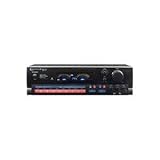
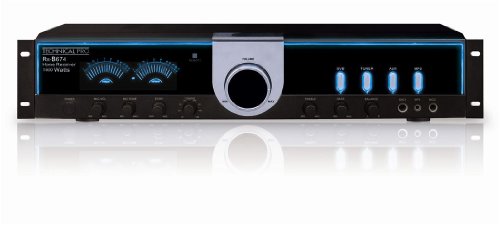
Technical Pro RX-B503 Stereo Receiver from Technical Pro

Now Have Our company's Long Anticipated Technical Pro RX-B503 Stereo Receiver Available For You

With regards to getting actual value for your money while you test a new product, you at the very least wish the item to perform the way it does inside the marketing campaigns. If this does not carry out at the very least that much, then you've got the right to get unhappy. At Technical Pro we are happy to present you with our most recent Technical Pro RX-B503 Stereo Receiver, the result of long hours of investigation along with development.

Technical Pro RX-B503 Stereo Receiver

At no time in our background have we had something that we are more proud of. You are going to be totally excited by the standard of Our company's freshest gadget. We've gone to significant lengths to make certain that the all new Technical Pro RX-B503 Stereo Receiver has been produced with the top quality materials accessible. This is the only way we understand how to make our goods as anything less just isn't good enough in addition to could well be something that the other sites could try to sell you.

You have depended on Our company's name brand for decades and are aware that every merchandise We've at any time produced has never been anything less than outstanding. After you have a close look at the excellence of the craftsmanship which has gone in to producing the Technical Pro RX-B503 Stereo Receiver, in addition to all the extra tiny variations along with benefits we have integrated, it is possible to see why our goods have always been so strongly recommended. we are confident that not only will you be delighted with our new product, but you will like the great affordable price.

Technical Pro RX-B503 Stereo Receiver
List Price : $199.00

You Save : Check Cheap Price

  Check Offer listing

If you've spent any time at all in professional audio, you know the name Technical Pro and what it stands for - incredible performance & sound, and the ultimate in reliability under harsh conditions. And now, Technical Pro offers the same technology in a series of integrated amps and receivers bringing more of what sets Technical Pro apart from all others. Digital fluorescent sound spectrum display Dual Karaoke / DJ microphone inputs Microphones controls - bass, treble, echo and volume 8 Different pre-set equalization modes Speaker Selector allows you to choose which speakers use Bass Booster Cooling speed fan prevents unit from getting too hot Remote control Removable rack-mount brackets Dimensions - 17w (19 w/ brackets) x 5.25h x 12.5d Weight - 15 lbs Power - 110-220V Switchable

Feature

  • Inputs - RCA (3 audio sources)
  • Outputs - Banana binding post (to 4 speakers), RCA (to record line) RCA (PRE-AMP level output)
  • AM/FM manual tuner
  • iPod / MP3 input with cable
  • Bass, treble and balance controls

Monday, May 27, 2013

Technical Pro VRTX15, 15 Inch Six way Carpeted Cabinet Speaker with Steel Grill, Black by Technical Pro

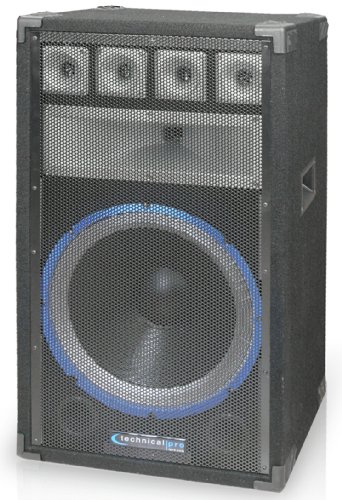
Technical Pro VRTX15, 15 Inch Six way Carpeted Cabinet Speaker with Steel Grill, Black
List Price : $219.00

You Save : Check Price Now

  Check Offer listing

You will be one of billion people that seeking an outstanding item for your house. There are numerous market locations for you and every person such as shopping center, the mall, retail market and online. So it is straightforward for client like you to shop. But the most convenience way is via the web. Only turn on your net and you are going to get what you like with out leaving your house.

We would like to introduce you to our new item Technical Pro VRTX15, 15 Inch Six way Carpeted Cabinet Speaker with Steel Grill, Black from Technical Pro that is one from the most well-known items selling online now. With our very best top quality having a fair price, it is a straightforward reason for you to decide to pick our new clever merchandise for your house. We have been establishing this item with all our experience to create Technical Pro VRTX15, 15 Inch Six way Carpeted Cabinet Speaker with Steel Grill, Black be essentially the most effect property improvement item online and around the globe.

Even though it came having a great top quality however it still came using the most reasonable price. Simply because we aim that a majority of customers they don't wish to spend their budget by unnecessary. So we are confident that Technical Pro VRTX15, 15 Inch Six way Carpeted Cabinet Speaker with Steel Grill, Black will probably be the most effective item that you simply ever purchased. And you are going to enjoy this wise item and glad that you simply got it for your beautiful property.

Click here for more on the Technical Pro VRTX15, 15 Inch Six way Carpeted Cabinet Speaker with Steel Grill, Black full review & compare prices

Technical Pro VRTX15, 15 Inch Six way Carpeted Cabinet Speaker with Steel Grill, Black

Do you need to set up for a big room performance. Are you in need of a huge professional club sound for your venue or stage. Studio professionals and sound designers are choosing Technical Pro for their big sound needs. Technical Pro has once again built a speaker that can handle the wear and tear of today’s live sound environment and consistently output a professional sound. The VRTX15 is constructed with Technical Pro’s built-to-last technology. The sturdy design will keep your speaker components safe and sound in the most rugged environments. Built in are two carrying handles that will make moving and positioning this speaker a piece of cake. These speakers are stackable or mountable using the single pole mount. The front panel is a full length perforated steel cage that will allow your sonic boom out and yet still keep everything safe inside. The forward thinking design also includes reinforced corners for additional protection. This massive loudspeaker is capable of pushing out 1200 watts of peak power. The sound output of this speaker is designed to give a professional blend of lows, mids and highs. The insides consist of three Piezo Tweeters, one 15 Inch woofer with a 2.5 Inch voice coil and 50 ounce magnet, and one 4 x 10 Inches horn, compression driver with a 1.5 Inch voice coil and 25 ounce magnet. This combination will give you the booming club lows, solid mid range and sparkling highs that you expect from a professional speaker. With a larger woofer, comes bigger sound. To compensate for the massive low end thump, Technical Pro added three tweeters to balance out the high end. You will never need to worry about an unbalance output. If you are setting up a large club, large live stage or are designing sound for a large venue, adding these to your set up is a must do. The inputs are 1/4 Inch and banana binding post. Connect any standard amplifier and you are ready to rock.

Feature

  • 15 Inch Six way Carpeted Cabinet Speaker w/ Steel Grill
  • 1200 watts peak power - Woofer: 15 Inch woofer, 2.5 Inch voice coil, 50 oz. magnet - Mid: 5. Inch x 15 Inch horn, compression driver 1.5 Inch voice coil 25 oz. magnet - Tweeter: 4 piezo
  • Full Length perforated steel grill
  • 2 Integral carry handles
  • Inputs: 1/4 Inch, Banana

Sunday, May 26, 2013

10 Spy Methods: A Workplace Espionage Series

I spend a great deal of my time dealing with highly sensitive, highly confidential information. Over the years I have noticed that many of the institutions I have worked with have gone to great pains and considerable expense to make certain their computer systems have state of the art firewalls and "hacker-proof" encoding systems. Nonetheless, they continue to leak data like a sieve!

How can this be? Simple, they are guarding the air conditioner duct instead of the front door.

So, what do I know about it? My knowledge of the field is pretty backdoor in nature.

First of all, I work a lot with people who love nothing more than to stir up hate and discontent wherever they go. They will intentionally uncover and publish sensitive information. It is fun for them. In order to find out why they do these things I do a lot of debriefing with them when an incident occurs.

Second, I have two brothers who made carriers out of law enforcement. One of my brothers served many years as a state trooper and another as a sheriff's deputy. They were both extremely successful in the investigation facet of the job and I am about to tell you why. Then you can see if you are vulnerable to the same kind of attack.

The sources of data loss, in no particular order, are as follows.

1. Waste Archeology.
Simply speaking, someone who really wants to know your secrets will go through your trash. And guess what? It is completely legal. Buy a .00 shredder, and use it.

2. Taps.
Seriously, if you have a wireless system it is pretty simple to eaves drop via laptop from the coffee shop next door.

3. Pop-ins.
Be extremely wary of maintenance crews and repair staff you haven't called in. Check ID's. Also, be aware of someone who comes in asking a lot of questions. You may be surprised what the reception staff will tell someone who smiles and asks nicely.

4. Hacking in.
Do you know the easiest way to hack in to a secure system? Steal the password taped to the computer screen at Ed's work station. Trust me, I see it every day. You know what else? Most people use the same password for every system they need to access.

5. Cordless phones.
Remember most cordless phones and cells are basically fancy radios. If it puts out a signal, the signal can be picked up with a scanner.

6. Ticking bombs.
Answering machines, voice mail, fax machines anything that requires an access code can be beaten (remember the password taped to the computer?).

7. Starbucks.
Never discuss sensitive information in a public restaurant! If I wanted to know about a corporations business, I go to the snack bar at lunch and read the paper over coffee. You won't believe the things you hear (if you're in education, teacher lounges are hair raising!).

8. Brain cramps.
Unlocked cabinets, offices, desks, paper work left out, answering stupid questions over the phone. Hello?

9. Traitors.
Face it, some folks will sell you out for the right price. The right price might be as simple as someone asking, "So, what confidential things are you working on these days?" You really wouldn't believe what people have told me in answer to that question. Keep sensitive information on a need to know basis.

10. Describing a spy.
The typical spy is a short, fat, tall, thin man, with curly, bald hair. She often wears provocatively conservative clothing and is liberally conservative. In other words, ANYBODY is the typical spy.

Now I will expound upon each section individually.

Part 1

One of the first areas I mentioned in breaches in security was "rifled" trash. I believe this to be foremost method of stealing confidential information. In reality it isn't even stealing. In California Versus Greenwood the Supreme Court held the Constitution does not prohibit warrant less search and seizure of garbage left for collection outside the curtilage (the enclosed area immediately surrounding a home or dwelling) of a home. This could include places of business.

Here are some pro-active steps you can take.

1. Don't transfer confidential documents to recycling vendors.

2. If you have a copier, install a shredder next to it.

3. Purchase a cross-cut shredder for extremely sensitive documents.

4. Destroy all waste paper.

5. Get shredders for each individual. People won't wait in line to use a bulk shredder.

6. DON'T KEEP CARDBOARD BOXES OF UNINVENTORIED OLD DOCUMENTS LYING AROUND.

Part II.

Remember, James Bond is not interested in your secrets.

That being said, competitors, disgruntled employees, ex-spouses and other wreakers of havoc are interested in your secrets.

There are many methods of "bugging" out there.

The five main categories are, in alphabetical order: Acoustic, Optical, RF, Tie-In, and Ultrasonic.

1. Acoustic - low tech glass to the wall, ventilation, electrical out-let, out side the window, stand by the door, close proximity listening.

2. Optical - high end and expensive.

3. RF - radio frequency and receiver devices.

4. Tie-in - hooking directly in to a phone line. The box is usually easily accessible on an exterior wall.

5. Ultrasonic - think transmitter, receiver but with audio pressure rather than radio waves.

The most prevalent and dangerous of this is alphabetically and most destructively listed first. Always be aware of your immediate surrounding when discussing confidential information.

Part III

Always check the identification of persons who pop in to do technical work around your office. This is especially true if you PERSONALLY have not called them for service. These folks are known as "spooks".

You see, "Spooking" is a hide in plain site method of gaining access to confidential information

It seems carrying a clipboard will gain a spook access to most places, even those with confidential data to protect.

But, there are other common tools the spook may carry to increase their appearance of authenticity: 2-way Radio, Maglight, Construction worker hard hat, and my personal favorite the attention tone cell phone. Now, this particular ruse means the spook has a partner but is anything more impressive than that tone from the "base office" checking the technicians' status?

However, the most powerful, by far, access granting technique (I mean this will get you in anywhere) is a set of Dickies. Yes, Dickies. The same things you wore for summer jobs in high school and college. They are a virtual cloak of invisibility in our culture.

Most common guises:

1. Telephone/communications technicians - (typically wearing blue/grey Dickies)

2. Computer service technicians - (polo shirt and tan Dickies pants)

3. Copy machine technicians - (polo shirt and blue Dickies pants)

4. Custodians - (typically anyone with a set of blue/grey Dickies is granted cart blanche access)

5. Messenger services - (typically wearing brown Dickies)

6. A/C heating technicians - (typically wearing blue-green Dickies)

The beauty of this type of "spooking" is nobody ever challenges these folks. And if some particularly diligent person does question them, the spook goes into his, "fine with me, but it will be at least four weeks until I can get back here. We're really backed up." That is usually enough to intimidate even the most on top of things staff member.

I don't usually recommend testing out these surveillance techniques, the power of the Tricky Dickie is not to be believed unless you actually see it in action. So, get your lazy brother-in-law a set of Dickies and send him through your office. You won't believe the results. Afterwards, get the lazy bum to do your yard work so you get your moneys worth from the Dickie investment.

Part IV

There are many ways of stealing computer files. As a matter of fact there is a whole niche market dedicated to nothing more than developing and distributing new types of spy ware. Then there is another niche market dedicated to selling protection against these pieces of malware. Folks, I talking millions of dollars each year, connected to these two enterprises. Would it surprise you to know that many of the same people writing the protection software also write the malware?

Any who, how to these insidious pieces of data stealing malware get into your systems? Simple, you or one of your associates, put them there.

I know what you're thinking, "Not me! I would never do such a self destructive thing. Neither would anyone I work with." And, at least intentionally, you're right. But, take look at the most common avenues of entry and think through your response again.

Most Common Sources of Spyware:
1. Screen savers
2. Emoticons
3. Clip Art
4. Spam
5. Email attachments
6. Unprotected web browsing (cookies)
7. Peer to Peer applications (mp3 files)
8. Shareware
9. Freeware
10. Involuntary Download (may present as a fictitious error you must click to correct)
So, have you EVER added any of this to your system, even to an email? I know me too.
Oh well, as MaElla (my grandmother) used to say, "Once bitten, twice shy."

What have we learned?

Basically, don't put anything unverified on your system, even if it is really, really cool.

Bye the way, does anyone know where MaElla got "Once bitten, twice shy"?

Part V

First and foremost, never use a cordless phone for anything other than the convenience of answering a call. Switch to a corded line for any specific communications.

Monitoring cordless and cellular phone calls has become a million dollar hobby in America. Some even sell their monitored conversations on line. Think ex-girlfriend sites.

Mobile phones are an even greater liability. Not only are means available to monitor the conversations, but it is not particularly difficult to track the location of the parties based on their signal. Now, that is scary.

This tracking will become even easier when newer 3G phones come online because their base stations are even closer together.

What can you do?
1. Use a regular line for increased security.
2. Dedicate a secure line in your office for sensitive communication. They are not cheap. Or-Com offers one that has fair reviews for about 0.00.
3. Use first names on non-secure lines.
4. Speak in general terms on non-secure lines.

If you think these precautions a completely paranoid, you may be right. On the other hand, browse Spy Emporium for an overview of just a few of the surveillance devices available.

Part VI.

If you work with confidential data, and you use any of the following pieces of technology, it is just a matter of time until your confidentiality is compromised.

1. Disposable roll fax machines.
Used rolls contain copies of every item the machine has received.

2. Unattended fax machines.
Fax machines left on are excellent sources for stealing confidential data. When I expect a fax, I alert the office staff to put it in a folder in my in-box.

3. Dictation machines.
If you use dictation machines and leave tapes on the secretaries' desk to be transcribed don't be shocked when a tape goes missing (Tell the truth, this has already happened hasn't it?).

5. Answering machines.
Most are accessible with a 3 or 4 digit code. Most people don't change the factory set "3, 4, and 5." These are easy to hack.

6. Cordless microphones.
Crystal clear signals for about 1,300 feet or a quarter mile.

Part VII.

One of the most popular and reliable methods for gathering information from an organization is to "scout the perimeter." Although, this is not as sexy as the "mission impossible" methods, it is very popular and very effective.

Here are your most frequent weak spots.

1. The company lunch room. Many people actually carry confidential files with them to review over lunch.
2. The neighborhood coffee klatch. This is true for the same reason as above.
3. The guy who is always at the newsstand when you pick up your paper. You know the one you discuss current office events with because he doesn't know the people anyway.
4. The chatty new friend your spouse just made. Think about this when discussing business with your spouse.
5. Any off-site meeting places. Luncheon rooms, county offices, etc.

Part VIII

Next to going through the trash, the most vulnerable area for exploitation is the human brain.
The major offenders:
1. Unsecured offices, cabinets, drawers and doors.
2. Files left on the desk over night.
3. Group passwords.
4. Company phone directories.
5. Desktop rolodexes.

Part IX

Another source of compromised confidential information is the office traitor. Most people have a price. The price may have been paid the last time they were insulted, degraded or unappreciated at the office. One the other hand, there may be an actual monetary price for which a trusted associate can be turned.

Here are some of the characteristics you may need to be on the look out for.

1. Those passed over for raises, passed over for promotion.
2. Those experiencing significant financial difficulty.
3. Those who gamble.
4. Those that employ recreational pharmaceuticals (including alcohol).
5. Those involved in labor and management disputes.
6. Those that seem to always be on the lookout for the next big deal.

Part X.

Basically, if you take a look at the qualifications for a field agent for the CIA you can build a fair profile of what an office spy may "look like."

1. A Bachelors Degree, rarely more.
2. Solid academic record, not outstanding.
3. Interest in inter-business and international affairs.
4. Solid interpersonal skills.
5. Solid communication skills.
6. Frequent traveler.
7. Interest in foreign languages.
8. Prior residence outside the area.
9. Possible prior military experience.
10. Experience in business and/or economics (but with deficit skills in their own finance management).
11. The person is usually between the ages of 21-35.
12. Previous work in law enforcement or corrections.
13. May be considered a loner, not a joiner.
14. No police record.
15. Hobbies include martial arts, scuba, hunting, proficiency with firearms, chess, math, avid reader, may write prolifically or play a musical instrument, etc.
16. The person may be interested in training manuals and field guides.

In other words, just about anybody who would make a good employee. The key is to look for unusual groupings of these skills. Most people will meet 3 or 4 of the criteria. Those who meet 6 or more should be considered possible candidates.

This section completes a ten part series concerning confidentiality and security.

Friday, May 24, 2013

Write Your Loved Ones History - 50 Questions You Have To Request Parents Or Grandma and grandpa Before They Die

Nobody expected it.

While climbing into his spa, my healthy 87- year-old father-in-law ended up, fell, and broke a rib. He started internal bleeding the doctors could not stop. In 2 days, Gene vanished.

Fortunately, we'd taken time a couple of several weeks earlier to record Gene's existence story, determined some amazing details. He would be a semi-professional baseball player, an excellent watercolorist, along with a US Marine. Like a marketing executive for Kaiser and then Del Monte, he done national promotional initiatives with mega-stars of his day, including Joan Crawford, Darlene Reynolds, Stan Musial, Lloyd Bridges yet others.

We recorded Gene's existence story on two occasions: once in a small family dinner, then throughout a full time income-room interview a couple of several weeks later.

We transcribed the audio recordings from the tracks, added pictures, after which submitted the entire package to a different free site that can help people write great personal and family tales. (See resource section,below). Gene's family and buddies can observe his story and add comments or photos when they wish. The profile that people co-produced with Gene is really a celebration of his existence. It is also an immediate, significant reference to his kids as well as their grandchildren. Anybody can produce a existence story on their own or a family member. It's as easy as putting aside a while and doing a bit of careful listening.

I have assisted 100s of individuals over the US, Canada, and Mexico capture their existence tales. According to 100s of hrs of interviews, I have boiled lower my experience into three key tips, and also the 50 most efficient questions you should use for achievement.

Success Tip #1: Pre-Interview Preparation is essential

To make the most of your loved ones history session, be as prepared as you possibly can.

. Inform the topic of the objective of the job interview, who'll view it, and just how it will likely be used · Ready your questions ahead of time · Put aside a basic place and time free of disruptions

· It's wise to utilize a voice or video recorder test all equipment completely before beginning

· It's frequently helpful to utilize a tape or dvr and transcribe the dictation

· Photos, souvenirs, or any other visual helps are wonderful memory-joggers. Request your susceptible to prepare some ahead of time

· Listen diligently and lightly request questions of clarification

· Create pressure the topic into something they're uncomfortable talking about

Success Tip #2: Be Flexible and inventive

Initially when i first began doing existence story interviews, it appeared as though people spent nearly all time speaking regarding their beginning. When I got more experience, I started to understand that almost everyone has one, two or even three key determining occasions within their lives. For a lot of, it's childhood. For several males, it's World war 2, Korea, or Vietnam. The determining moments emerge like getting a gold nugget inside a streambed. Be responsive to these determining moments and episodes. Listen extra-carefully, and request questions. Frequently a much deeper portrait of the individual emerges, laden with wealthy encounters, values, values, and layers of complexity. If you do not complete the job interview in a single sitting, set to start dating ? to resume your conversation later

Success Tip #3: Organize Existence Tales into Sections

Many people (yes, even shy ones) enjoy being the middle of attention and share tales using their lives. You will find two challenges for any family historian. The very first is to capture the tales inside a structured, logical way. The second reason is to make certain the tales are as complete as you possibly can and contain details (names, dates, places), fully-attracted figures, a tale line, and possibly a finale. The GreatLifeStories site divides the existence experience into 12 "sections" such as the following the advancement of many lives. On the internet site, each chapter consists of between 10 to 25 questions. (Below, I have selected the 50 questions that always obtain the best results). Don't be concerned it's not necessary to request all of them. Actually, after a couple of questions, you might not need to request any longer-the job interview assumes a existence of their own.

The most crucial objective would be to make certain you cover as most of the chapter titles as you possibly can. The chapter titles are logical and somewhat chronological so as: Origins, School Days, Off and away to Work, Romance and Marriage, and so on. You can incorperate your own sections, too. The 12-chapter product is a terrific way to organize both interview, along with the existence story article, video, or audio recording.

CHAPTER 1: At first

1. What were your folks and grandma and grandpa full names, dates of birth, places of birth.

2. What were the jobs of the parents?

3. The number of children were inside your family? Where had you been within the selection?

4. In most cases, that which was your childhood like?

5. What a couple of tales remember most clearly regarding your childhood?

6. What are the particularly happy, funny, sad or instructive training you learned while becoming an adult?

CHAPTER 2: Where You Live

1. That which was it like in which you was raised?

2. Describe your most significant relationships

3. Where and just how did "news of the neighborhood" usually flow?

CHAPTER 3 School Days

1. Make sure to capture names and dates attended of grammar, high, schools, trade or technical schools

2. What exactly are your earliest school day reminiscences?

3. What are the instructors or subjects you particularly loved or resented?

4. What have you learn in individuals first many years of school that you'd like to pass through along to another generation?

5. Had you been involved with sports, music, drama, or any other extra-curricular activities?

CHAPTER 4: Off and away to Work

1. What did you need to be whenever you was raised?

2. That which was the first job, and just how have you have it?

3. That which was the first boss like? What have you study from her or him?

4. Have you leave? Quit? Get marketed? Get fired?

5. Had you been ever unemployed for any very long time? If that's the case, how have you handle it?

CHAPTER 5 Romance &lifier Marriage

1. Exactly what do you recall regarding your first date?

2. How do you know you were really for each other?

3. Let me know the way you "sprang the issue,Inch or the way it was sprang for you.

4. Let me know regarding your marriage ceremony. What year? Where? The number of attended? Honeymoon?

5. Let me know about beginning your loved ones.

6. Had you been married more often than once? How frequently?

CHAPTER 6: Leisure and Travel

1. What were the wedding family holidays or outings you are able to recall?

2. What free time activities are you currently associated with?

3. What exactly are your finest achievements within this area?

Chapter Seven: Church buildings

1. Would you follow any religious tradition?

2. If that's the case which, and what's it like?

3. Maybe you have transformed faiths?

4. What role do your values play inside your existence today?

5. What can you know your kids regarding your belief?

CHAPTER 8 War &lifier Peace

1. Had you been a volunteer, drafted or perhaps a careful objector?

2. Should you did not serve, exactly what do you recall about standing on the house front throughout world war 2?

3. What key moments would you recall regarding your service?

4. What can you know present day youthful soldiers, mariners and fliers?

CHAPTER 9 Triumph and Tragedy

1. What were probably the most wondrous, fulfilling occasions of the existence?

2. Any sad, tragic or difficult occasions you'd choose to share for example losing a family member, employment, or something like that you thought about?

3. What long term training have you study from these tough occasions? Wondrous occasions?

4. Have there been any moments you recall as true discoveries in almost any section of your existence?

5. If you could do this one factor in a different way inside your existence, what can that be?

CHAPTER 10 Words of Knowledge

1. Whoever else learned over your daily life that you might want to see the more youthful generation?

2. Individuals will sometimes repeat aphorisms for example "honesty is the greatest policy." When they do, make sure to request the way they found that existence lesson.

CHAPTER 11: Funnybones

1. What were your family's favorite jokes or pranks?

2. Who's, or was, the household comedian? "Straight" guy?

3. What is the funniest family story you remember?

CHAPTER 12 Thanks

1. What exactly are you most grateful for you personally your existence?

2. How perhaps you have trained your kids to become grateful?

3. Exist products or locations that mark special gratitude for that ones you like? What exactly are they? What exactly are their tales?

In conclusion, it is usually smart to request a wide open-ended question for example:Inch Can there be anything I've not requested about that you'd choose to discuss?Inch You'll frequently be amazed and delighted in the solutions!

Assets:

For a lot of more tips about how to capture precious genealogy, visit world wide web.GreatLifeStories.com

Thursday, May 23, 2013

Top Ten Methods to Monitor Your SAP Roles for SAP Audit Compliance

The SAP System has numerous confirming tools and ABAP/4 programs that offer detailed analysis and monitoring of SAP security configuration for SAP Audit Compliance. The monitoring reviews could be performed via two techniques, performing the particular program using transactions SE38, SA38 or SUIM (Repository Information System).

Objective: For every system, evaluate the key security related system profile parameters.

Report: RSPARAM Frequency: Monthly

The parameter values ought to be set up based on the suggested through the SAP Security Administration Standard Operating Methods produced by the organization. Furthermore, these parameters ought to be consistently looking for all SAP systems.

Objective: Ensure security access is correctly limited to Security Team people as defined in Guidelines and Methods.

Report: RSUSR040 Frequency: Bi-weekly

Evaluate the customers that have the authorization objects S_USER_GRP, S_USER_AUT and S_USER_Professional. Use of these objects ought to be restricted to the foundation and Security Administration Teams. The Foundation Team must only have display access and the opportunity to totally reset passwords for those user groups except SUPER and Security. This access allows the users' get access to system administration functions. No non-technical user should get access to these objects

Objective: Ensure use of security transactions is correctly guaranteed.

Report: RSUSR010 Frequency: Monthly

Look for transactional use of security administration. Execute report RSUSR010 and appearance for transactions PFCG, SU01, SU02, SU03 and SU05. They control accessibility profile generator, user administration, profile administration, authorization maintenance and web surfer administration. If you notice any non sap security people get access to this transaction this will raise a warning sign.

Objective: Ensure table access is correctly set up.

Report: RSUSR040 Frequency: Monthly

Use of maintain tables ought to be matched using the Basis Team. And, table access must coincide having the ability to perform configuration. Evaluate the customers which have table access for client independent and dependent table access. (S_TABU_CLI and S_TABU_DIS). Client independent table access ought to be restricted to the Sandbox and Configuration Master clients.

Objective: Make sure that all customers are correctly designated towards the correct user group.

Report: RSUSR002 Frequency: Monthly

Evaluate the customers defined for those clients and systems. Each user ought to be designated to some valid pre-approved user group. Look for user who're designated to basis security and help-desk

Objective: Make sure that impermissible passwords are consistently implemented and meet standard operating methods.

Transaction: SE16 Frequency: Semi-yearly

Verify the information found in table USR40. This table consists of specific impermissible password configurations.

Objective: Ensure SAP Profile Generator is correctly set up.

Transaction SPRO Frequency: Semi-yearly.

Evaluate the configuration and activation from the SAP Profile Generator. Evaluate the documentation within the Enterprise IMG to make sure all configuration steps happen to be effectively completed. This activity should concentrate on new systems.

Objective: Look for change and by hand placed objects to the role

Evaluate the table for objects that have been placed by hand and transformed access. This can find out the security managers about a few of the role that are developed according to security policy. It's a sound practice to not have roles with by hand or change authorization object

Transaction: SE16 Frequency: Semi-yearly

Objective: Search for updates to transaction to object configuration in SU24 Transaction

Transaction: SE16 Frequency: Monthly

Transaction SU24 ought to be maintained so no manual authorization objects have to be put into the authorization tab on profile generator. And if the wrong authorization object or area value is introduced in to the profile generator it ought to be transformed only through SU24. This can then allow only correct or blank area values are introduced in therefore the correct values could be joined and also the proper authorizations designated. Monitoring these changes can give the SAP Audit Group the configuration changes designed to the transactions.

Objective: Roles alterations in the machine

Transaction: SUIM Frequency: Monthly

Here the SAP Audit compliance group is searching for amount of changes happening towards the roles. When the volumes of changes are extremely high, then this gives them a pre warning for additional analysis in to the approval.

Tuesday, May 21, 2013

Biometrics

ABSTRACT

Biometric identification refers to identifying an individual based on his/her distinguishing physiological and/or behavioural characteristics. As these characteristics are distinctive to each and every person, biometric identification is more reliable and capable than the traditional token based and knowledge based technologies differentiating between an authorized and a fraudulent person. This paper discusses the mainstream biometric technologies and the advantages and disadvantages of biometric technologies, their security issues and finally their applications in day today life.

INTRODUCTION:

"Biometrics" are automated methods of recognizing an individual based on their physical or behavioral characteristics. Some common commercial examples are fingerprint, face, iris, hand geometry, voice and dynamic signature. These, as well as many others, are in various stages of development and/or deployment. The type of biometric that is "best " will vary significantly from one application to another. These methods of identification are preferred over traditional methods involving passwords and PIN numbers for various reasons: (i) the person to be identified is required to be physically present at the point-of-identification; (ii) identification based on biometric techniques obviates the need to remember a password or carry a token. Biometric recognition can be used in identification mode, where the biometric system identifies a person from the entire enrolled population by searching a database for a match.

A BIOMETRIC SYSTEM:

All biometric systems consist of three basic elements:

Enrollment, or the process of collecting biometric samples from an individual, known as the enrollee, and the subsequent generation of his template. Templates, or the data representing the enrollee's biometric. Matching, or the process of comparing a live biometric sample against one or many templates in the system's database.

Enrollment

Enrollment is the crucial first stage for biometric authentication because enrollment generates a template that will be used for all subsequent matching. Typically, the device takes three samples of the same biometric and averages them to produce an enrollment template. Enrollment is complicated by the dependence of the performance of many biometric systems on the users' familiarity with the biometric device because enrollment is usually the first time the user is exposed to the device. Environmental conditions also affect enrollment. Enrollment should take place under conditions similar to those expected during the routine matching process. For example, if voice verification is used in an environment where there is background noise, the system's ability to match voices to enrolled templates depends on capturing these templates in the same environment. In addition to user and environmental issues, biometrics themselves change over time. Many biometric systems account for these changes by continuously averaging. Templates are averaged and updated each time the user attempts authentication.

Templates

As the data representing the enrollee's biometric, the biometric device creates templates. The device uses a proprietary algorithm to extract "features" appropriate to that biometric from the enrollee's samples. Templates are only a record of distinguishing features, sometimes called minutiae points, of a person's biometric characteristic or trait. For example, templates are not an image or record of the actual fingerprint or voice. In basic terms, templates are numerical representations of key points taken from a person's body. The template is usually small in terms of computer memory use, and this allows for quick processing, which is a hallmark of biometric authentication. The template must be stored somewhere so that subsequent templates, created when a user tries to access the system using a sensor, can be compared. Some biometric experts claim it is impossible to reverse-engineer, or recreate, a person's print or image from the biometric template.

Matching

Matching is the comparison of two templates, the template produced at the time of enrollment (or at previous sessions, if there is continuous updating) with the one produced "on the spot" as a user tries to gain access by providing a biometric via a sensor. There are three ways a match can fail:

Failure to enroll. False match. False nonmatch.

Failure to enroll (or acquire) is the failure of the technology to extract distinguishing features appropriate to that technology. For example, a small percentage of the population fails to enroll in fingerprint-based biometric authentication systems. Two reasons account for this failure: the individual's fingerprints are not distinctive enough to be picked up by the system, or the distinguishing characteristics of the individual's fingerprints have been altered because of the individual's age or occupation, e.g., an elderly bricklayer.

In addition, the possibility of a false match (FM) or a false nonmatch (FNM) exists. These two terms are frequently misnomered "false acceptance" and "false rejection," respectively, but these terms are application-dependent in meaning. FM and FNM are application-neutral terms to describe the matching process between a live sample and a biometric template. A false match occurs when a sample is incorrectly matched to a template in the database (i.e., an imposter is accepted). A false non-match occurs when a sample is incorrectly not matched to a truly matching template in the database (i.e., a legitimate match is denied). Rates for FM and FNM are calculated and used to make tradeoffs between security and convenience. For example, a heavy security emphasis errs on the side of denying legitimate matches and does not tolerate acceptance of imposters. A heavy emphasis on user convenience results in little tolerance for denying legitimate matches but will tolerate some acceptance of imposters.

BIOMETRIC TECHNOLOGIES:

The function of a biometric technologies authentication system is to facilitate controlled access to applications, networks, personal computers (PCs), and physical facilities. A biometric authentication system is essentially a method of establishing a person's identity by comparing the binary code of a uniquely specific biological or physical characteristic to the binary code of an electronically stored characteristic called a biometric. The defining factor for implementing a biometric authentication system is that it cannot fall prey to hackers; it can't be shared, lost, or guessed. Simply put, a biometric authentication system is an efficient way to replace the traditional password based authentication system. While there are many possible biometrics, at least eight mainstream biometric authentication technologies have been deployed or pilot-tested in applications in the public and private sectors and are grouped into two as given,

facial recognition, voice recognition iris scan, retinal scan,

CONTACT BIOMETRIC TECHNOLOGIES:

For the purpose of this study, a biometric technology that requires an individual to make direct contact with an electronic device (scanner) will be referred to as a contact biometric. Given that the very nature of a contact biometric is that a person desiring access is required to make direct contact with an electronic device in order to attain logical or physical access. Because of the inherent need of a person to make direct contact, many people have come to consider a contact biometric to be a technology that encroaches on personal space and to be intrusive to personal privacy.

Fingerprint

The fingerprint biometric is an automated digital version of the old ink-and-paper method used for more than a century for identification, primarily by law enforcement agencies. The biometric device involves users placing their finger on a platen for the print to be read. The minutiae are then extracted by the vendor's algorithm, which also makes a fingerprint pattern analysis. Fingerprint template sizes are typically 50 to 1,000 bytes. Fingerprint biometrics currently have three main application arenas: large-scale Automated Finger Imaging Systems (AFIS) generally used for law enforcement purposes, fraud prevention in entitlement pro-grams, and physical and computer access.

Hand/Finger Geometry

Hand or finger geometry is an automated measurement of many dimensions of the hand and fingers. Neither of these methods takes actual prints of the palm or fingers. Only the spatial geometry is examined as the user puts his hand on the sensor's surface and uses guiding poles between the fingers to properly place the hand and initiate the reading. Hand geometry templates are typically 9 bytes, and finger geometry templates are 20 to 25 bytes. Finger geometry usually measures two or three fingers. Hand geometry is a well-developed technology that has been thoroughly field-tested and is easily accepted by users.

Dynamic Signature Verification

Dynamic signature verification is an automated method of examining an individual's signature. This technology examines such dynamics as speed, direction, and pressure of writing; the time that the stylus is in and out of contact with the "paper"; the total time taken to make the signature; and where the stylus is raised from and lowered onto the "paper." Dynamic signature verification templates are typically 50 to 300 bytes.

Keystroke Dynamics

Keystroke dynamics is an automated method of examining an individual's keystrokes on a keyboard. This technology examines such dynamics as speed and pressure, the total time of typing a particular password, and the time a user takes between hitting certain keys. This technology's algorithms are still being developed to improve robustness and distinctiveness. One potentially useful application that may emerge is computer access, where this biometric could be used to verify the computer user's identity continuously.

CONTACTLESS BIOMETRIC TECHNOLOGIES:

A contactless biometric can either come in the form of a passive (biometric device continuously monitors for the correct activation frequency) or active (user initiates activation at will) biometric. In either event, authentication of the user biometric should not take place until the user voluntarily agrees to present the biometric for sampling. A contactless biometric can be used to verify a persons identity and offers at least two dimension that contact biometric technologies cannot match. A contactless biometric is one that does not require undesirable contact in order to extract the required data sample of the biological characteristic and in that respect a contactless biometric is most adaptable to people of variable ability levels.

Facial Recognition

Facial recognition records the spatial geometry of distinguishing features of the face. Different vendors use different methods of facial recognition, however, all focus on measures of key features. Facial recognition templates are typically 83 to 1,000 bytes. Facial recognition technologies can encounter performance problems stemming from such factors as no cooperative behavior of the user, lighting, and other environmental variables. Facial recognition has been used in projects to identify card counters in casinos, shoplifters in stores, criminals in targeted urban areas, and terrorists overseas.

Voice Recognition

Voice or speaker recognition uses vocal characteristics to identify individuals using a pass-phrase. Voice recognition can be affected by such environmental factors as background noise. Additionally it is unclear whether the technologies actually recognize the voice or just the pronunciation of the pass-phrase (password) used. This technology has been the focus of considerable efforts on the part of the telecommunications industry and NSA, which continue to work on

improving reliability. A telephone or microphone can serve as a sensor, which makes it a relatively cheap and easily deployable technology.

Iris Scan

Iris scanning measures the iris pattern in the colored part of the eye, although the iris color has nothing to do with the biometric. Iris patterns are formed randomly. As a result, the iris patterns in your left and right eyes are different, and so are the iris patterns of identical-cal twins. Iris scan templates are typically around 256 bytes. Iris scanning can be used quickly for both identification and verification

Applications because of its large number of degrees of freedom. Current pilot programs and applications include ATMs ("Eye-TMs"), grocery stores (for checking out), and the few International Airports (physical access).

Retinal Scan

Retinal scans measure the blood vessel patterns in the back of the eye. Retinal scan templates are typically 40 to 96 bytes. Because users perceive the technology to be somewhat intrusive, retinal scanning has not gained popularity with end-users. The device involves a light source shined into the eye of a user who must be standing very still within inches of the device. Because the retina can change with certain medical conditions, such as pregnancy, high blood pressure, and AIDS, this biometric might have the potential to reveal more information than just an individual's identity.

Emerging biometric technologies:

Many inventors, companies, and universities continue to search the frontier for the next biometric that shows potential of becoming the best. Emerging biometric is a biometric that is in the infancy stages of proven technological maturation. Once proven, an emerging biometric will evolve in to that of an established biometric. Such types of emerging technologies are the following:

Brainwave Biometric DNA Identification Vascular Pattern Recognition Body Odor Recognition Fingernail Bed Recognition Gait Recognition Handgrip Recognition Ear Pattern Recognition Body Salinity Identification Infrared Fingertip Imaging & Pattern Recognition

SECURITY ISSUES:

The most common standardized encryption method used to secure a company's infrastructure is the Public Key Infrastructure (PKI) approach. This approach consists of two keys with a binary string ranging in size from 1024-bits to 2048-bits, the first key is a public key (widely known) and the second key is a private key (only known by the owner). However, the PKI must also be stored and inherently it too can fall prey to the same authentication limitation of a password, PIN, or token. It too can be guessed, lost, stolen, shared, hacked, or circumvented; this is even further justification for a biometric authentication system. Because of the structure of the technology industry, making biometric security a feature of embedded systems, such as cellular phones, may be simpler than adding similar features to PCs. Unlike the personal computer, the cell phone is a fixed-purpose device. To successfully incorporate Biometrics, cell-phone developers need not gather support from nearly as many groups as PC-application developers must.

Security has always been a major concern for company executives and information technology professionals of all entities. A biometric authentication system that is correctly implemented can provide unparalleled security, enhanced convenience, heightened accountability, superior fraud detection, and is extremely effective in discouraging fraud. Controlling access to logical and physical assets of a company is not the only concern that must be addressed. Companies, executives, and security managers must also take into account security of the biometric data (template). There are many urban biometric legends about cutting off someone finger or removing a body part for the purpose of gain access. This is not true for once the blood supply of a body part is taken away, the unique details of that body part starts to deteriorate within minutes. Hence the unique details of the severed body part(s) is no longer in any condition to function as an acceptable input for scanners.

The best overall way to secure an enterprise infrastructure, whether it be small or large is to use a smart card. A smart card is a portable device with an embedded central processing unit (CPU). The smart card can either be fashioned to resemble a credit card, identification card, radio frequency identification (RFID), or a Personal Computer Memory Card International Association (PCMCIA) card. The smart card can be used to store data of all types, but it is commonly used to store encrypted data, human resources data, medical data, financial data, and biometric data (template). The smart card can be access via a card reader, PCMCIA slot, or proximity reader. In most biometric-security applications, the system itself determines the identity of the person who presents himself to the system. Usually, the identity is supplied to the system, often by presenting a machine-readable ID card, and then the system asked to confirm. This problem is "one-to- one matching." Today's PCs can conduct a one-to-one match in, at most, a few seconds. One-to-one matching differs significantly from one-to-many matching. In a system that stores a million sets of prints, a one-to-many match requires comparing the presented fingerprint with 10 million prints (1 million sets times 10 prints/set). A smart card is a must when implementing a biometric authentication system; only by the using a smart card can an organization satisfy all security and legal requirements. Smart cards possess the basic elements of a computer (interface, processor, and storage), and are therefore very capable of performing authentication functions right on the card.

The function of performing authentication within the confines of the card is known as 'Matching on the Card (MOC)'. From a security prospective MOC is ideal as the biometric template, biometric sampling and associated algorithms never leave the card and as such cannot be intercepted or spoofed by others (Smart Card Alliance). The problem with smart cards is the public-key infrastructure certificates built into card does not solve the problem of someone stealing the card or creating one. A TTP (Trusted Third Party) can be used to verify the authenticity of a card via an encrypted MAC (Media Access Control).

CULTURAL BARRIERS/PERCEPTIONS:

People as diverse as those of variable abilities are subject to many barriers, theories, concepts, and practices that stem from the relative culture (i.e. stigma, dignity or heritage) and perceptions (i.e. religion or philosophical) of the international community. These factors are so great that they could encompass a study of their own. To that end, it is also theorized that to a certain degree that the application of diversity factors from current theories, concepts, and practices may be capable of providing a sturdy framework to the management of employees with disabilities. Moreover, it has been implied that the term diversity is a synonymous reflection of the initiatives and objectives of affirmative action policies. The concept of diversity in the workplace actually refers to the differences embodied by the workforce members at large. The differences between all employees in the workforce can be equated to those employees of different or diverse ethnic origin, racial descent, gender, sexual orientation, chronological maturity, and ability; in effect minorities.

ADVANTAGES OF BIOMETRIC TECHNOLOGIES:

Biometric technologies can be applied to areas requiring logical access solutions, and it can be used to access applications, personal computers, networks, financial accounts, human resource records, the telephone system, and invoke customized profiles to enhance the mobility of the disabled. In a business-to-business scenario, the biometric authentication system can be linked to the business processes of a company to increase accountability of financial systems, vendors, and supplier transactions; the results can be extremely beneficial.

The global reach of the Internet has made the services and products of a company available 24/7, provided the consumer has a user name and password to login. In many cases the consumer may have forgotten his/her user name, password, or both. The consumer must then take steps to retrieve or reset his/her lost or forgotten login information. By implementing a biometric authentication system consumers can opt to register their biometric trait or smart card with a company's business-to-consumer e-commerce environment, which will allow a consumer to access their account and pay for goods and services (e-commerce). The benefit is that a consumer will never lose or forget his/her user name or password, and will be able to conduct business at their convenience. A biometric authentications system can be applied to areas requiring physical access solutions, such as entry into a building, a room, a safe or it may be used to start a motorized vehicle. Additionally, a biometric authentication system can easily be linked to a computer-based application used to monitor time and attendance of employees as they enter and leave company facilities. In short, contactless biometrics can and do lend themselves to people of all ability levels.

DISADVANTAGES OF BIOMETRIC TECHNOLOGIES:

Some people, especially those with disabilities may have problems with contact biometrics. Not because they do not want to use it, but because they endure a disability that either prevents them from maneuvering into a position that will allow them to make use the biometric or because the biometric authentication system (solution) is not adaptable to the user. For example, if the user is blind a voice biometric may be more appropriate.

BIOMETRIC APPLICATIONS:

Most biometric applications fall into one of nine general categories:

Financial services (e.g., ATMs and kiosks). Immigration and border control (e.g., points of entry, precleared frequent travelers, passport and visa issuance, asylum cases). Social services (e.g., fraud prevention in entitlement programs). Health care (e.g., security measure for privacy of medical records). Physical access control (e.g., institutional, government, and residential). Time and attendance (e.g., replacement of time punch card). Computer security (e.g., personal computer access, network access, Internet use, e-commerce, e-mail, encryption). Telecommunications (e.g., mobile phones, call center technology, phone cards, televised shopping). Law enforcement (e.g., criminal investigation, national ID, driver's license, correctional institutions/prisons, home confinement, smart gun).

CONCLUSION:

Currently, there exist a gap between the number of feasible biometric projects and knowledgeable experts in the field of biometric technologies. The post September 11 th, 2002 attack (a.k.a. 9-11) on the World Trade Center has given rise to the knowledge gap. Post 9-11 many nations have recognized the need for increased security and identification protocols of both domestic and international fronts. This is however, changing as studies and curriculum associated to biometric technologies are starting to be offered at more colleges and universities. A method of closing the biometric knowledge gap is for knowledge seekers of biometric technologies to participate in biometric discussion groups and biometric standards committees.

The solutions only needs the user to possess a minimum of require user knowledge and effort. A biometric solution with minimum user knowledge and effort would be very welcomed to both the purchase and the end user. But, keep in mind that at the end of the day all that the end users care about is that their computer is functioning correctly and that the interface is friendly, for users of all ability levels. Alternative methods of authenticating a person's identity are not only a good practice for making biometric systems accessible to people of variable ability level. But it will also serve as a viable alternative method of dealing with authentication and enrollment errors.

Auditing processes and procedures on a regular basis during and after installation is an excellent method of ensuring that the solution is functioning within normal parameters. A well-orchestrated biometric authentication solution should not only prevent and detect an impostor in instantaneous, but it should also keep a secure log of the transaction activities for prosecution of impostors. This is especially important, because a great deal of ID theft and fraud involves employees and a secure log of the transaction activities will provide the means for prosecution or quick resolution of altercations.

REFERENCES:

Pankanti S, Bolle R & Jain A, Biometrics:The Future of Identification Nalwa V, Automatic on-line signature verification Biometric Consortium homepage, http://WWW.biometrics.org

Sunday, May 19, 2013

New HD Evening World wide web.MAD-DJ.COM Luxurious DJ Package


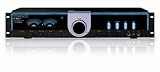
World wide web.MAD-DJ.COM Luxurious DJ Package Incorporates: DJ MAD Mike Behringer Air 4000 Amplifier Two 1100W Technical Professional Loudspeakers Two Speaker Stands Two wireless microphones O...

Thursday, May 16, 2013

Purchasing a pc For The Small Company - Selecting the best System

In case your searching for a great computer for the small company the first consideration will most likely performance in addition to cost. With present day technology, however, the performance amounts of present day computer systems are appropriate for many business programs and I am not speaking concerning the latest, finest, condition-of-the-art machines either. You are able to think that a desktop computer within the 0-00 range will have the ability to handle any company software that you'll be using. Be it bookkeeping or a / r software, for example Quicken, your small company desktop should not be any major expense.

An Average Small Company Computer:

Here's one particualr good system that will not break your budget - it costs under 0.00.

SYX Venture H420i ITX PC Bundle Apple E5300 Dual Core 2.6 GHz, genuine Windows® 7 Home Premium 64 Bit, 2GB DDR2, 500GB Hard Disk, DVDRW, 19″ LCD Monitor Small Form Factor PC.

Exactly what does this technique summary really mean?

Dual-Core technology (dual core-only a fancy reputation for two microprocessors)
500GB SATA II hard disk (that's 500 gb: 100GB is alright to begin with)
2GB of DDR2-800 memory (DDR2 is a kind of memory utilized in most more recent systems today-it is the 2 GB memory size that people like)
Apple E5300 Dual Core 2.6 GHz CPU (Apple brand dual core (two microprocessors) with an excellent speed of two.6 GHz)
Home windows 7 Home Premium 64 software (the latest form of Microsoft Home windows)
Apple DG41 system board (not too important unless of course you'll need a different system board)
GMA 4500 integrated graphics (standard graphics card great for regular programs)

This Bundle Includes:

SYX Venture H420i ITX Desktop Computer (the CPU)
SYX Venture 19-inch LCD Monitor (and it arrives with a monitor)

One benefit to shopping online is the quantity of information that's open to the customer. Here's one particualr spec sheet (the particular specs list is a lot longer however i have stored it shorter with regard to article space): A spec sheet is nearly always present in an online ad.

Key Features:

Condition: New
Lifestyle: Business
Os's: Home windows 7 Professional 64-Bit
Startup Operating-system: Microsoft Home windows XP Professional
Platform: PC
Form Factor: small-ITX
Bays: one to five.25" Slim/Slot Loading Drive Bay
Internal Bays: one to three.5" Drive Bay
Available 3.5" Drive Bays: 1 - Front Accessible
Available 5.25" Drive Bays:
PCI Slots (Total): 1 Low Profile PCI
PCI Slots (Available): 1 Low Profile PCI
PCI Express X1 Slots (Available): N/A
PCI Express X16 Slots (Total): N/A
PCI Express X16 Slots (Available):N/A
PS/2 Keyboard Fittings: 1

As you can tell the data relating to this product is extensive then one you will possibly not find in a store. Together with a spec sheet you will also get an excellent description from the system as proven below:

The SYX Venture H420i Desktop PC's compact design easily fits on any desk inside your office. It comes down packed with the Home windows 7 Professional 64-bit operating-system having a Home windows XP Professional custom image downgrade for that versatility your productivity programs require. Handle multiple presentations and reviews concurrently while using Apple Pentium Dual-Core E5400 2.7GHz processor and 2GB of DDR2 memory. A Slim DVD±RW Dual Layer optical drive allows you backup data to Dvd disks and Compact disks. The Slim DVD±RW Dual Layer optical drive provides fast installing and uploading for your company's server through the 10/100/1000Mbps Gigabit Ethernet port.

Used (refurbished) versus. New

You will find a multitude of locations where one can buy refurbished (including off-lease) desktop computer systems today. It's the opinion of the author, however, that you ought to get this to consideration only when around 200 dollars is the fact that vital that you your financial allowance. With technology being starting as low as it's today, why go ahead and take chance? On top of that new systems generally include a one year materials warranty. That which you buy used today might not be working very well inside a couple of several weeks.

Best Computer Deals

You will find lots of computer superstores and office supply stores that sell personal computers and you will have some very good prices too. However, don't overlook buying a pc online. Many occasions you will find better prices while offering which include free delivery too making the acquisition more appealing and also the selection is extremely frequently astonishing. Remember, it does not occupy any space on the floor to place up an internet site.

Overall, you need to have the ability to get the best desktop using the performance level you're searching for, and, using the cost you are prepared to pay. Don't let yourself be afraid to look online. It might be your best choices for finding the right computer prices available on the market.

Other Factors When Purchasing A Small Company System

Expansion abilities for future years might be necessary for you. There might be a time when you wish more memory or perhaps a bigger hard disk. Possibly the body has began to operate just a little reduced and you need to speed up. Whatever problems you might encounter in the future they could be alleviated by connecting up an exterior device or adding a card for an internal expansion slot. Listed here are a couple of thing to remember when creating a brand new computer purchase.

USB Ports

USB ports are essential components where you can connect ink jet printers, expensive drives, camera, Audio players, rodents and keyboards, Often a CPU will include four USB ports but you will find some which have eight or even more. Should you anticipate hooking up lots of exterior products make certain to check on the number of ports include the machine

Optical Compact disc and DVD Drives

A Compact disc and DVD if at all possible. Also desirable will be a Compact disc-RW (re-writable) format and DVD-RW format if affordable inside your budget. A recordable DVD drive can store as much as 4.7GB of information which causes it to be a great device to possess if you work with graphics or muisic intensive data.

Some drives may also record data, images, music or video to Compact disks and/or Dvd disks. Really you would like both.

PCI Slots

The body must have two free PCI slots for future expansion options, PCI slots will allow you to make use of other hardware features like audio cards or network plugs.

AGP Slot

Your graphics card utilizes a high-speed expansion slot to show three dimensional images. (AGP means Faster Graphics Port). What's good about getting an AGP slot would be that the graphics card may have it's own RAM that's uses using the CPU so that your system won't decelerate. Getting this slot is going to be advantageous if you would like high energy graphics later on.

Modem

Required for hooking up to the web. An interior 56Kbps V.90 modem is standard fare on virtually every new PC nowadays

Hard Disk Drives

Today the normal computer will include a hard disk which has a minimum of 40 GB of storage. Our recommendation, though, could be in a minimum of 100GB to 160GB for small company programs. A typical drive speed is 5400 revoltions per minute but a 7200 revoltions per minute Ultra-ATA/100 drive will work far better. The Ultra-ATA is exactly what connects the drive towards the PC.

Hopefully wearing down the hardware elements when i have in the following paragraphs can make your small company computer buy a little simpler. Thank you for reading through and when you loved the content please leave a comment.

Tuesday, May 14, 2013

Brand New for 2009! The Technical Pro Rx-b674 Rack Mount Black 1,500 Watt 4 Channel Professional Dj/home Theater Power Amplifier from TECHNICAL PRO

Brand New for 2009! The Technical Pro Rx-b674 Rack Mount Black 1,500 Watt 4 Channel Professional Dj/home Theater Power Amplifier
You Save : Check Cheap Price

  Check Offer listing

In a world filled up with remarkable products which are supposed to make our way of life smoother, it might be tough to visualize that something newer or even significantly enhanced will come around. TECHNICAL PRO is here now to tell you that not simply have we launched a completely new Brand New for 2009! The Technical Pro Rx-b674 Rack Mount Black 1,500 Watt 4 Channel Professional Dj/home Theater Power Amplifier for you, but that what we have created will knock back the opposition aside. Never before has any one developed this sort of astonishingly valuable item and now we are providing the possiblity to aquire one for your self.

Just like you well realize it requires more than solely proclaiming that an item is either cutting edge or maybe improved to make it so. We understood this when we began to build our new Brand New for 2009! The Technical Pro Rx-b674 Rack Mount Black 1,500 Watt 4 Channel Professional Dj/home Theater Power Amplifier and have been determined to make sure that it's got whatever you could possibly ever require. We set out to create a product which wouldn't only be greater than something our competitors have on this marketplace, but could leave them so far behind that there's absolutely no way they can even come close to making up ground.

Now that you recognize our Brand New for 2009! The Technical Pro Rx-b674 Rack Mount Black 1,500 Watt 4 Channel Professional Dj/home Theater Power Amplifier may be rated as the very best that you can buy, what things can we potentially do to make it better yet? First of all we've included numerous extra features that not one of the others on the market appear to have even thought about. However, because the accurate indication of a terrific product is in giving genuine bang for your buck, we've established the price so surprisingly reduced they are flying off the shelves.

Click here for more information about the Brand New for 2009! The Technical Pro Rx-b674 Rack Mount Black 1,500 Watt 4 Channel Professional Dj/home Theater Power Amplifier full review & Low price

Brand New for 2009! The Technical Pro Rx-b674 Rack Mount Black 1,500 Watt 4 Channel Professional Dj/home Theater Power Amplifier

BRAND NEW FOR 2009! THE TECHNICAL PRO RX-B674 RACK MOUNT BLACK 1,500 WATT 4 CHANNEL PROFESSIONAL DJ/HOME THEATER POWER AMPLIFIERFeatures:digital home theater / DJ receiver1500 watts peak power 4 ChannelFM manual tuner Inputs: RCA (3 audio sources) Graphic fluorescent display meter Dual mic input Outputs: Banana binding post (to 4 speakers), RCA (to record line) Removable rack-mount brackets Remote controlBLACK 19" 5 3/4" 12 1/4" 13 lbs 110/220V19" Rack Mountable (Removable rack brackets)

Feature

  • digital home theater / DJ receiver
  • 1500 watts peak power
  • 4 Channel
  • Graphic fluorescent display meter
  • Inputs: RCA (3 audio sources)

Sunday, May 12, 2013

2012 The new sony Bravia TV Selection - Benefits and features

Bravia EX Series

Starting using the EX650, which will come in 40" and 46" dimensions, and it is a alternative for that outgoing EX520. Motionflow XR100 processor, with 50Hz refresh rate and Wireless LAN ready. Just like the outgoing Bravia range, the whole range will boast Wise TV capacity.

The most popular EX720 model from this past year is ongoing, and won't be changed. The finish of existence with this range come in June / This summer, and there's no alternative model introduced or planned at this time. The EX720 is really a Full HD, 100Hz Wise TV, with three dimensional and it is Wireless LAN ready. Additionally, it includes a Motionflow XR200 processor. Available dimensions are 32", 40", 46", 55" and 60".

Bravia HX Series

Sony's HX750 model includes a 200Hz refresh rate, having a Motionflow XR400 processor. You receive Wi-fi built-in and some three dimensional glasses incorporated. Sony's Edge Brought includes a new spec known as "Frame Dimming", which changes the general Brought backlight levels to match what you are watching, but simultaneously maintaining brightness and contrast. This cuts down on the energy consumption by a few margin. Also enhanced may be the three dimensional experience, using a new "4X High-speed three dimensional Panel". Crosstalk is removed by exhibiting 200 frames total (100 in every eye) per second, and taking advantage of backlight blinking technology which supplies a far more comfortable three dimensional experience. Available dimensions are 32", 40", 46" and 55".

The next phase in range may be the HX850, that is Sony's alternative for that lately stopped HX825. Having a refresh rate of 200Hz, the motion clearness is beefed track of a more powerful Motionflow XR800 processor. The primary Picture Engine processor jumps up from "X-Reality" in most from the lower series, for an "X-Reality Professional". The Brought panel also advantages of "Local Dimming", that is an Brought control that alters the amount of light output in more dark moments, supplying a wider contrast, and particulars when viewing more dark moments. A greater degree of three dimensional processing, a part of X-Reality Professional, is incorporated as compared to the HX750, that is called "three dimensional Super resolution". Another major difference may be the Opti Contrast Panel with Gorilla Glass. This enhances viewing experience by getting rid of internal and exterior reflection, giving a much better contrast and better colours. The HX850 will come in 46" and 55" dimensions.

The top quality Bravia Brought screen remains the HX925 - exactly the same model which presently sits towards the top of Sony's specs charts. This model is going to be ongoing until a minimum of August this season, and will come in 55" and 65" dimensions. It's very similarly specced towards the HX925, using the only technical, although major, difference being "Intelligent Peak Brought" - a method which varies backlight brightness instantly via a range of LEDs directly behind the screen. This will make the HX925 the only real fully backlit Brought within the Bravia range.

The new sony Bravia Tech Reference

BRAVIA- Bravia means Best Resolution Av Integrated Architecture. The reputation for all The new sony Televisions.

three dimensional Super Resolution- three dimensional movies include separate layers of video information. three dimensional Super Resolution, a fundamental element of X-Reality Professional, can analyse and enhance resolution, contrast and colour when viewing three dimensional content.

4X High-speed three dimensional Panel - The new sony uses a sophisticated 4x High-speed three dimensional Panel to enhance three dimensional viewing comfort. It accomplishes this by exhibiting 200 fps as a whole, composed of 100 fps for every right and left image, writing each image two times in quick succession, switching off backlighting throughout this method using backlight blinking technology. This guarantees a clearer, much more comfortable three dimensional experience without crosstalk.

Advanced Auto Volume - prevents the jarring jumps in television volume whenever a tv program adopts an industrial break, whenever you change channels or whenever you switch video inputs.

AVCHD- With wide industry support, AVCHD is really a movie data format utilized by most Full HD capable cameras. Bravia Televisions will have back AVCHD content, via USB, for stunning films around the giant screen. AVCHD means Advanced Video Codec Hd.

Corning Gorilla Glass- Ultra Strong, and scratch resistant, yet under 1mm thick, this glass offers satisfaction although aiding with display quality included in OptiContrast.

Digital Noise Reduction- TV broadcasts, DVD movies, Web Video along with other video sources frequently contain digital noise connected with compression and transmission. This really is frequently viewed as small specks of random colour, blockiness along with other flaws. DNR minimises this, for any obvious, more realistic image.

Full HD three dimensional- Full HD three dimensional comprises 1920 X 1080 lines signal resolution but adds 'left' and 'right' frames which will make up a three dimensional image. Shown on a complete HD screen, rapidly alternating right and left images are displayed synchronized with powered by batteries glasses. Full HD-three dimensional guarantees each eye sees an entire Full HD image.

Game Mode- Lots of people connect Gaming systems for their televisions. BRAVIA presently has four game modes which optimise screen and seem configurations. Modes include Portable, suitable for PSP gaming, and modes customized to older video games, including 4:3 aspect ratio games.

i-Manual- You don't need to search around for any paper instructions, i-Manual is a straightforward to look, highlighted instructions saved inside the television. The simple to navigate, friendly layout makes using i-manual simple. Furthermore, i-Manual offers cutting corners including "Fundamental Operations' and 'Trouble-shooting'.

Edge Brought- Multiple LEDs round the fringe of the tv to light up the LCD panel. This method enables for very slim, lightweight TV designs, and adds to low energy consumption.

Dynamic Edge Brought with Local Dimming- Dynamic Edge Brought models can transform their light output to complement what's being seen, even when both dark and lightweight areas exist on screen simultaneously - this is whats called 'local dimming'. BRAVIA televisions by using this technology offer very wide contrast, meaning much deeper shades of black, better detail and much more vibrant colours.

Dynamic Edge Brought with Frame Dimming- smartly changes overall Brought backlight levels to match what's being seen although maintaining image brightness and contrast. It makes sense a substantial decrease in energy consumption.

Intelligent Peak Brought- This technique varies backlight brightness instantly, according to what's proven on screen. A range of LEDs directly behind the screen divides the image into numerous zones, because both versions could be lowered or increased individually. The resulting picture includes a effective mixture of intense highlights, better whites and deep wealthy, satisfying shades of black and shadow particulars.

Motionflow- the word provided to Sony's innovative motion-removing technologies. Model dependent, Brought backlight activity, LCD panel and film processing techniques are combined for any softer, more realistic viewing experience.

Motionflow XR100- Unique Image Blur Reduction, removes common causes of 'blur' present in many sports broadcasts in conjunction with special Brought backlight activity, for any softer, natural viewing experience.

Motionflow XR200- Motionflow XR200 uses Image Blur Reduction and 100Hz frame doubling strategies to smooth motion and are perfect for viewing sport and action movies.

Digital Noise Reduction- TV broadcasts, DVD movies, Web Video along with other video sources frequently contain digital noise connected with compression and transmission. This really is frequently viewed as small specks of random colour, blockiness along with other flaws. DNR minimises this, for any obvious, more realistic image.

Motionflow XR400- Motionflow XR400 uses Image Blur Reduction and 200Hz sections, and Brought backlight blinking to attain smooth, yet detailed motion reproduction appropriate for that quickest sports and action movies.

Motionflow XR800- While using latest Brought backlight blinking and backlight checking techniques, Motionflow XR800 couples a 200Hz panel, Image Blur reduction and also the innovative video processing for that smoothest, most existence-like motion associated with a BRAVIA television.

Opera TV Store- Bravia Televisions now have the Opera TV store, where one can download games and social networking applications to match all people from the family.

Opticontrast- Ambient light can degrade display quality because of reflection. Opticontrast enhances display quality by utilizing thin, strong Gorilla glass in conjunction with special resin to bond the glass towards the LCD panel. This reduces both internal and exterior insights from ruining the viewing experience.

The new sony Entertainment Network (SEN)- a suite of entertainment services which may be utilized from BRAVIA Televisions. When attached to the internet, you have access to Music Limitless, Video Limitless along with other entertainment channels including Get caught up TV.

vTuner- When attached to the internet, BRAVIA Televisions give use of 1000's of internet r / c. Browse by genre, language, country and city while using handheld remote control and display.

Wi-Fi Direct- Now supported wise-phones and pills can send photos, video and music to some BRAVIA without requiring a radio router entry way. What this means is going to buddies and family can share files without hooking up to your house network, not waste time and hang-up.

X-Reality Professional- Sony's latest video processor which allows you like the most effective picture quality from the 2D or three dimensional video source using pixel by pixel and frame by frame analysis.